- Texas Property Round Up
- Posts
- Texas property is finding firmer ground
Texas property is finding firmer ground
Inside: Houston character, suburb resets, and sharper growth bets

Hannah Collinsworth
April 25, 2026

Where Texas land tells the story of what comes next.
This week, the clearest Texas property signals were not the loudest ones. What kept standing out instead was where confidence still looked deliberate, whether that meant a house with real personality, a suburb settling into more realistic pricing, or developers still moving forward where they think long-term demand is sturdy.
What I kept returning to was how much more selective the market feels. Texas still rewards land, identity, and expansion, but the edge now seems to belong to places and projects that feel harder to replicate and easier to understand.

What stands out in Texas right now is not just growth. It is how much more the market is rewarding clarity. The projects, places, and properties getting the strongest response tend to be the ones that feel easier to understand, easier to trust, and better matched to real demand.
That is part of why beehiiv feels relevant here. It gives operators and publishers a cleaner way to build and grow a newsletter without adding more friction behind the scenes.
Your reach is rented. And landlords evict.

One algorithm update. One policy change. One bad quarter for a platform that isn't yours. The audience you spent years building disappears overnight.
beehiiv is what happens when you stop renting and start owning. A list that's yours. Revenue that compounds. Growth tools built in from day one.
30% off your first 3 months with code LIST30. Start building today.


★ Houston personality still commands attention
★ Williamson County gets easier to read
★ San Antonio keeps building outward
★ Waller doubles down on growth

★ Texas metros split in Q1
★ Forney gets a new retail magnet
★ DFW business park lands financing
★ South Austin adds renovated affordable homes
Houston’s boldest homes are still in their own lane

What fascinated me most was not the nickname. It was the willingness to lean all the way into the house’s identity. Mansion Global reports that Houston’s so-called Darth Vader house is back on the market for $7,777,777 after being reworked into a more gallery-like home by artist Enrique Cabrera, with a roughly 7,000-square-foot layout and a far more authored feel than the typical upper-end listing.
That feels like a useful Houston signal. In a city with no shortage of big homes, distinction itself can still behave like value. The premium here is not just square footage or zip code. It is the fact that the house knows exactly what it is, and in this market, that clarity still travels.
Key Takeaways
★ Houston luxury still rewards houses with a strong point of view.
★ Design identity can still support premium pricing.
★ Distinctive homes may hold attention longer than generic large listings.
★ In Texas, personality can still be part of the property value story.
Williamson County is cooling in a productive way

What stayed with me here was the modesty of the shift. Community Impact reports that the average residential market value in Williamson County dipped from $473,876 in 2025 to $455,812 in 2026, with Hutto posting the biggest decline and Leander the smallest.
That matters because it makes Central Texas feel more legible again. This does not read like a collapse. It reads like a market that is settling enough for buyers to tell the difference between inflated expectations and places that still hold real long-term confidence.
Key Takeaways
★ Williamson County is softening without unraveling.
★ Some suburban pricing is finally resetting toward reality.
★ Central Texas is becoming easier for patient buyers to read.
★ Not every suburb is holding up the same way.
Metro San Antonio is still building for everyday growth
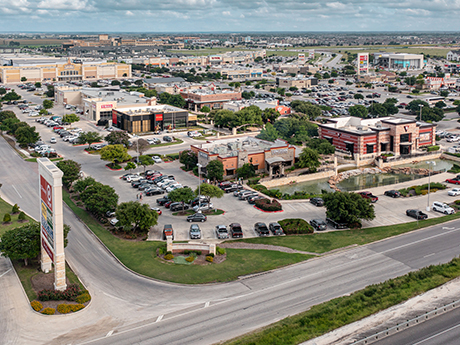
What struck me most was how practical this bet feels. Shopping Center Business reports that NewQuest is moving ahead on a 100,000-square-foot retail expansion project in metro San Antonio, extending a corridor that continues to attract family-serving, convenience-driven growth rather than flashy headline development.
That is one of the quieter Texas property truths. A great deal of value still gets created in places that make daily life easier, not louder. Retail expansion like this is not just about shops. It is about confidence in rooftops, traffic patterns, and the kind of suburban routine that keeps turning into durable land use.
Key Takeaways
★ San Antonio growth still looks strongest where everyday demand is obvious.
★ Convenience-led corridors remain powerful property signals in Texas.
★ Retail still follows household momentum more than hype.
★ Practical expansion can say more about a market than flashy luxury projects.
Waller is still turning open land into momentum

The detail I kept returning to was the mix. Yield Pro reports that work has started on Gracious Gardens, a 28-acre mixed-use project in Waller that will include apartments, high-density single-family homes, and retail just south of Waller High School.
That feels like one of the clearer outer-ring Texas signals right now. Waller is not just absorbing overflow. It is being treated as a place where developers think housing, retail, and routine daily life can start clustering in a more complete way. That is usually what happens when a fringe market begins behaving like a real next market.
Key Takeaways
★ Waller is being built as more than just a pass-through growth story.
★ Mixed-use formats are spreading farther beyond core suburbs.
★ Retail follows quickly when developers believe residents will stay put.
★ Outer-ring Texas growth is getting more structured, not less.

Taken together, these stories point to a Texas market that feels more disciplined than dramatic. Houston still has room for bold, high-identity homes. Central Texas is settling into more readable pricing. San Antonio keeps expanding where routine demand is reliable. And counties like Waller are starting to look less like edges and more like future centers of gravity.
The signal I would watch next is where clarity keeps winning. That means homes with a distinct point of view, suburbs where pricing starts making practical sense again, and outer-ring projects that combine housing with enough daily infrastructure to feel finished. In this stretch of the Texas cycle, the strongest property story may not be size alone. It may be the places that feel most believable.
See you out on the property,
 | I’m Hannah Collinsworth, a Texas real estate writer and former Texas Monthly editor who has spent years covering architecture, land, and the people shaping both. Raised in San Antonio and now based in Houston, I write Texas Property Round Up with one belief at the center: the most interesting property stories are never just about the house, but what the house reveals about where Texas is headed. |
How was today's edition?Rate this newsletter. |