- Texas Property Round Up
- Posts
- San Antonio finds a brighter second act
San Antonio finds a brighter second act
Inside: Plano growth, San Antonio reinvention, and Houston control

Hannah Collinsworth
April 28, 2026
In partnership with


Where Texas land tells the story of what comes next.
The clearest Texas property stories today were not the ones trying hardest to impress. They were the ones that showed where real commitment is still landing, in established suburbs, in city cores willing to reinvent older assets, and in institutions making very practical land moves that say more than a splashy listing ever could.
What stayed with me was how intentional all of it felt. This was not a Texas market reaching in every direction at once. It was a Texas market making more specific bets on location, reuse, adjacency, and the kinds of housing and hospitality people are still willing to support.

The most convincing moves in Texas right now are the ones built around function. Clear use cases, specific demand, and less wasted motion. That is what makes a bet feel durable instead of merely ambitious.
That is why Wispr Flow feels relevant here. It helps teams move from thought to output with less friction, which is useful when speed and clarity both matter.
You think 4x faster than you type. Your IDE should keep up.

Wispr Flow lets you dictate prompts, acceptance criteria, and bug reproductions inside Cursor or Warp — with automatic file name and variable recognition. Say user_id, get user_id. Say useEffect, get useEffect.
Paste directly into GitHub, Jira, or Linear. Give coding agents the full context they need without typing a novel.
89% of messages sent with zero edits. Millions of developers use Flow daily, including teams at OpenAI, Vercel, and Clay. Free on Mac, Windows, and iPhone.


★ Plano is still betting on the version of itself that people already understand
★ San Antonio is turning an old office problem into a hospitality play
★ In Houston, control next door still counts as a smart property move
★ Housing finance is getting more specific about what Texas needs

★ Grapevine pipeline keeps filling
★ Haltom City wraps warehouse project
★ Guadalupe updates road-growth plan
★ Houston adds new hotel keys
Plano is still betting on the version of itself that people already understand

What struck me most was how straightforward this one was. Plano officials approved a 50-lot single-family development on 14.1 acres along Los Rios Boulevard, near Plano East Senior High School. No giant reinvention story. No elaborate concept language. Just more housing in a place that already knows how to translate schools, familiarity, and routine into demand.
That matters because some Texas markets still gain strength by doubling down on what works. Plano does not need to reinvent its identity every cycle. It just needs to keep feeding a housing pattern buyers already trust, and that kind of steadiness still carries real value in North Texas.
Key Takeaways
★ Plano still benefits from deeply established buyer trust.
★ School-adjacent land keeps carrying weight.
★ Familiar suburban product remains a durable Texas draw.
★ Not every growth story needs a dramatic new angle.
San Antonio is turning an old office problem into a hospitality play

What I kept returning to here was the scale of the reset. ConnectCRE reported that work will begin this summer to convert the empty 280,000-square-foot IBC Centre Tower I into a 300-room JW Marriott, with conversion costs estimated at $164 million, and plans for additional parking, a rooftop pool, and other amenities.
That feels like a very current Texas signal. In stronger urban markets, underused office space is no longer just a vacancy problem. It is increasingly an opportunity to rebuild value around hospitality, experience, and downtown relevance. San Antonio is not abandoning the site. It is giving it a more believable job.
Key Takeaways
★ San Antonio is leaning into adaptive reuse at a serious scale.
★ Downtown value is being reworked around experience, not office demand alone.
★ Empty office towers can still become strategic assets.
★ Texas city cores are getting more inventive about second acts.
In Houston, control next door still counts as a smart property move

What fascinated me most was how unflashy this move was. First Baptist Church acquired the seven-story office building and parking garage at 701 North Post Oak, right beside its main campus near the Katy Freeway and Loop 610. It had already been leasing the garage, which makes the purchase read less like an expansion of the theater and more like a long-planned tightening of the footprint.
That is a useful Houston reminder. Some of the smartest property moves here are not about chasing novelty. They are about adjacency, access, and gaining better control of a site that already matters. In a city shaped by scale and movement, that kind of practical consolidation can be more powerful than a bigger headline.
Key Takeaways
★ Houston still rewards practical expansion.
★ Parking and access remain real forms of property leverage.
★ Existing buildings can become more valuable through adjacent ownership.
★ The strongest Texas moves are often the most controlled ones.
Housing finance is getting more specific about what Texas needs
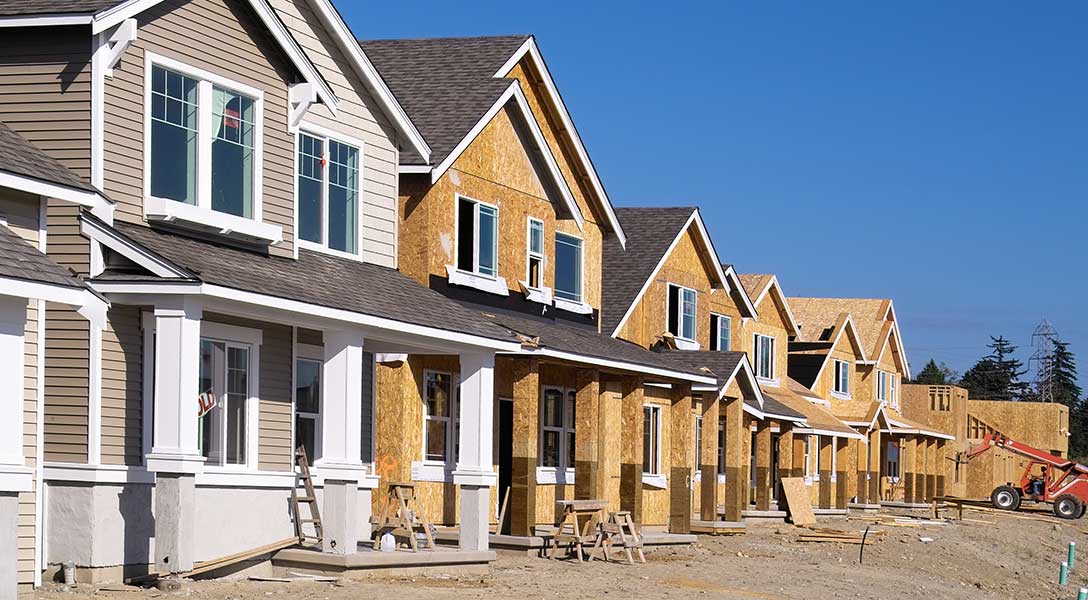
The detail I could not shake was how direct the program is. FHLB Dallas announced SHARE 2026, making up to $250 million in discounted advances available from May 4 through Dec. 31 for uses including affordable single-family and multifamily housing, LIHTC purchases, small-business lending, and community facilities.
That is not just a finance bulletin. It is a Texas housing signal. When capital tools become more targeted, it usually means the need has become too practical to ignore. In this phase of the market, affordability and availability are no longer side conversations. They are shaping how money gets structured in the first place.
Key Takeaways
★ Housing capital is becoming more intentional.
★ Affordability and availability are being treated as linked problems.
★ Texas lenders now have a clearer funding tool to work with.
★ The next housing story may be shaped as much by financing as by land.

Put together, these stories point to a Texas market that feels more deliberate than dramatic. Plano is reinforcing dependable suburban demand. San Antonio is finding new life in a dormant tower. Houston is showing how much value still resides in control and adjacency. And on the capital side, housing funding is getting more pointed about where it needs to land.
The signal I would watch next is the one where usefulness starts to beat spectacle. That could be a suburban tract near a trusted school, a downtown building that gets a better second act, or a Texas housing deal that works because the financing is finally lined up for the actual need. In this stretch of the cycle, the properties with the clearest purpose may be the ones that keep winning.
See you out on the property,
 | I’m Hannah Collinsworth, a Texas real estate writer and former Texas Monthly editor who has spent years covering architecture, land, and the people shaping both. Raised in San Antonio and now based in Houston, I write Texas Property Round Up with one belief at the center: the most interesting property stories are never just about the house, but what the house reveals about where Texas is headed. |
How was today's edition?Rate this newsletter. |