- Texas Property Round Up
- Posts
- League City’s west side gets bigger
League City’s west side gets bigger
Inside: Dallas reuse, San Marcos momentum, and where Houston keeps spreading

Hannah Collinsworth
May 16, 2026

Where Texas land tells the story of what comes next.
Today’s edition pulled me toward a version of Texas growth that feels less flashy and more consequential. The strongest stories were not about spectacle. They were about places getting larger, denser, or more useful in ways that suggest real confidence about what comes next.
What stood out most was how differently that confidence is showing up. In League City, it looks like a full master-planned community on the west side. In Dallas, it looks like an old landmark is being given a more believable second life. In San Marcos, it looks like student housing is arriving on a serious scale. And around Houston, it looks like growth is continuing to push outward in ways that are getting hard to ignore.

What feels most convincing in Texas right now is growth with a job to do. Not scale for the sake of scale, but projects and places becoming more useful, more legible, and easier to build around as demand moves outward and deeper into the state.
That is why NeoBrowser felt worth a look. It is an AI browser built to make online work more focused and usable, giving it a practical edge in a category that can otherwise feel crowded quickly.
Stop switching apps. Your browser can do it all.

Every tab you open, every copy-paste into ChatGPT, every lost train of thought — that's your browser failing you. Norton Neo fixes it. Built-in AI works directly inside your session. Hover to preview. Search everything from one bar. VPN and ad blocking included, free.


★ League City is making a bigger west-side bet
★ Dallas found a better use for an old icon
★ San Marcos is building for the students it already knows are coming
★ Houston’s fastest growth is no longer hard to spot

★ DFW office bet gets bigger
★ Katy affordable housing fills fast
★ Austin affordable housing breaks ground
★ Downtown Austin tracks its next phase
League City is making a bigger west-side bet

What caught my attention here was the pitch's completeness. Legacy, a 700-plus-acre Hillwood community on League City’s west side, is slated to bring about 1,630 homes, with prices stretching from the low $400,000s to $1.5 million, and ten homebuilders already involved.
That feels like a useful Texas signal. This is not just another subdivision story. It is a reminder that in high-growth corridors, the next premium often belongs to places being built as full ecosystems from the start, with enough scale to shape how an area grows around them.
Key Takeaways
★ League City still supports large master-planned conviction.
★ Houston’s southern edge keeps drawing long-range housing bets.
★ A wide price band helps the project reach more than one buyer type.
★ The west side is becoming a more serious growth lane.
Dallas found a better use for an old icon

What stayed with me was not the nostalgia, but the reset. The long-vacant Cabana Hotel has reopened as Cabana Design District, a $116 million mixed-income housing redevelopment with 175 apartments, about 40 percent of them set aside as affordable units.
That says something smart about Dallas right now. Prime urban buildings do not have to be frozen in their old identity to matter. Sometimes the stronger move is to give a well-known structure a use that fits the city better now than the original ever could.
Key Takeaways
★ Dallas is still rewarding adaptive reuse with ambition.
★ Mixed-income housing is becoming part of higher-visibility redevelopment.
★ Historic recognition still adds weight when paired with practical reuse.
★ The Design District keeps gaining residential gravity.
San Marcos is building for the students it already knows are coming
.jpg)
What interested me most was the scale relative to the setting. Elevate Development Partners landed $116 million in acquisition and construction financing for a 759-bed, 260-unit student housing project next to Texas State University and within walking distance of downtown San Marcos.
That matters because San Marcos keeps behaving like more than a pass-through between Austin and San Antonio. It is a city with its own demand engine now, and projects like this show just how much confidence still surrounds places with built-in enrollment, walkability, and a center of gravity people already use every day.
Key Takeaways
★ Texas State is still strong enough to support large housing bets.
★ Downtown-adjacent student housing carries extra value in San Marcos.
★ Big financing still shows up when demand looks durable.
★ Corridor cities with their own identity are getting easier to believe in.
Houston’s fastest growth is no longer hard to spot
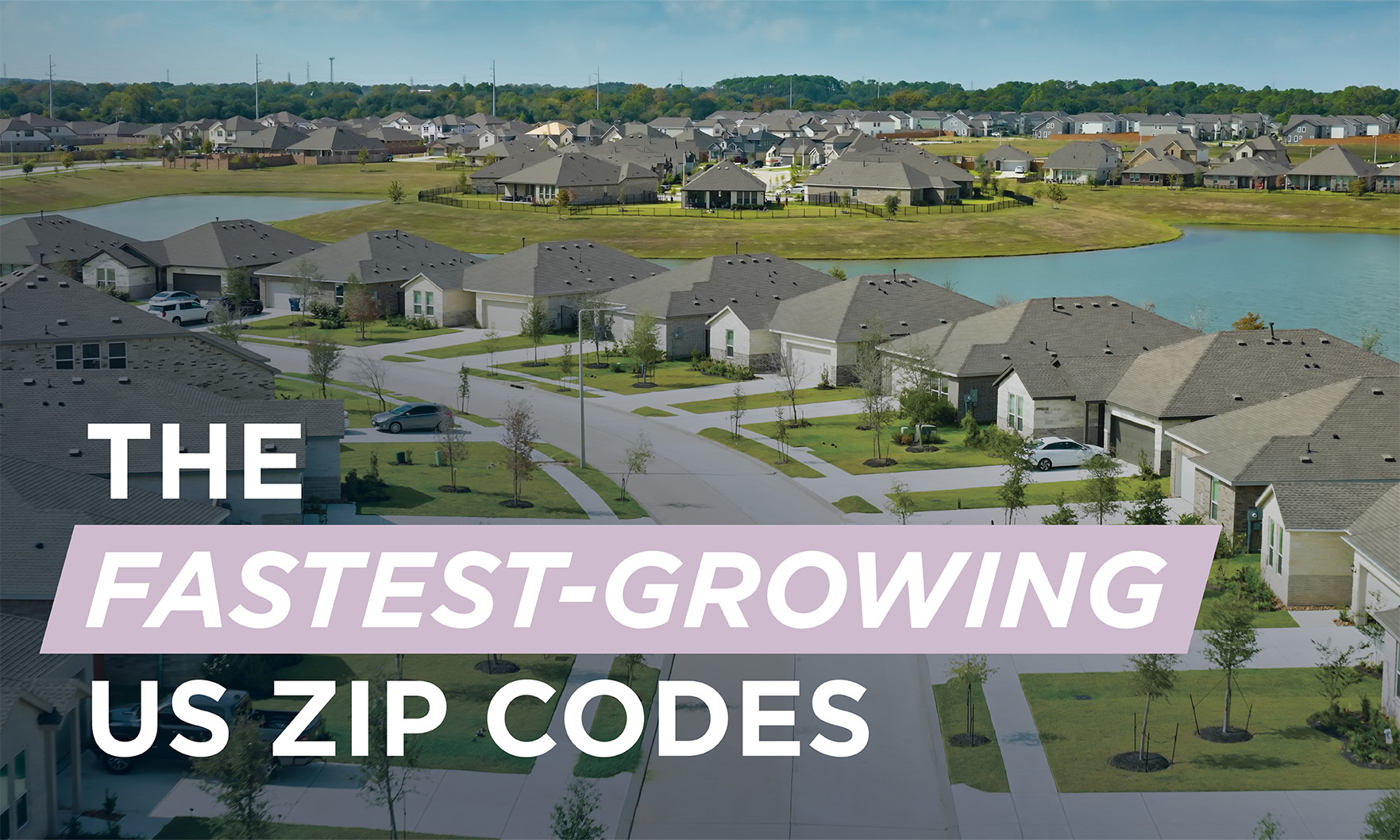
The detail I kept returning to was how concentrated the growth looks. According to Houston Agent Magazine’s write-up of a RentCafe study, three of the country’s fastest-growing ZIP codes are in greater Houston, with Fulshear’s 77441 leading Texas after housing units climbed from about 2,100 in 2014 to more than 10,600 in 2023. Katy’s 77493 and Richmond’s 77407 also posted major housing supply gains.
That is one of the clearest Texas signals in this batch. Houston’s story is still being written outward, in places where housing supply can still expand at a pace the urban core cannot match. When entire ZIP codes start moving like this, it tells you the next map of value is being drawn in real time.
Key Takeaways
★ Greater Houston is still producing nationally significant growth pockets.
★ Fulshear, Katy, and Richmond remain major housing expansion zones.
★ Supply growth at this scale changes how buyers read the region.
★ The outer edge continues to hold some of Texas’ strongest momentum.

Put these stories together, and the Texas pattern looks pretty clear. Growth is still happening, but it is getting sorted into more specific forms. League City is betting on a new large-scale neighborhood. Dallas is proving that older buildings can still anchor a new chapter. San Marcos is scaling up around a built-in demand base. And greater Houston keeps stretching outward, where housing can still move in volume.
The signal I would watch next is where scale and usefulness stay aligned. That could mean a master-planned community with enough range to hold value across buyer types, a legacy structure with a more convincing second act, or an outer-ring growth pocket that keeps adding homes fast enough to reshape the broader market. In this moment, the strongest Texas property stories are the ones that do not just look big. They look believable.
See you out on the property,
 | I’m Hannah Collinsworth, a Texas real estate writer and former Texas Monthly editor who has spent years covering architecture, land, and the people shaping both. Raised in San Antonio and now based in Houston, I write Texas Property Round Up with one belief at the center: the most interesting property stories are never just about the house, but what the house reveals about where Texas is headed. |
How was today's edition?Rate this newsletter. |