- Texas Property Round Up
- Posts
- CityCentre gets a stronger anchor
CityCentre gets a stronger anchor
Inside: Hill Country scale, logistics confidence, and a new Texas land squeeze

Hannah Collinsworth
May 05, 2026

Where Texas land tells the story of what comes next.
Today’s issue came together around a different kind of Texas confidence. Not the sort that shows up in a flashy listing or a breathless headline, but the kind you see when owners buy deeper into a place, developers keep moving dirt on a huge long-range vision, and capital still shows up for the property types people clearly believe in.
What I kept returning to was how specific the signal felt. In this batch of stories, Texas does not look hesitant. It looks selective. Hospitality is getting folded more tightly into mixed-use districts, Hill Country master plans are still expanding with ambition, affordable housing is still finding room in growth markets, and a new pressure point is emerging around the very land future housing may need.

What stands out in Texas right now is not a lack of confidence. It is how much more specific the winning bets have become. The projects drawing the strongest interest tend to have a clearer role, a tighter fit with demand, and less room for confusion about why they matter.
That is why Wispr Flow feels relevant here. It helps turn thoughts into words with less friction, which is useful when clarity and speed both matter.
PRDs by voice. Bug reports by voice. Ship faster.

Dictate acceptance criteria and reproductions inside Cursor or Warp. Wispr Flow auto-tags file names, preserves syntax, and gives you paste-ready text in seconds. 4x faster than typing.


★ CityCentre gets a stronger anchor
★ Spicewood is still thinking on a Texas scale
★ Denton is making room for housing that actually serves families
★ Texas land is getting a new rival

★ Fort Worth draws steady capital
★ Multigenerational homes stay in demand
★ DFW brokerage firms join forces
★ Corpus Christi gets more factory space
CityCentre gets a stronger anchor

What stood out to me was not just the hotel itself, but who bought it. MetroNational expanded its CityCentre footprint by acquiring the 244-room Moran Hotel in a joint venture with Rockbridge, adding another layer of control to one of Houston’s most legible mixed-use environments.
That feels like a very Texas kind of confidence move. When an owner already has a district that works, the next smart play is often not reinvention. It is tightening the grip around the pieces that make the whole place feel more complete. In Houston, that kind of adjacency still creates real value.
Key Takeaways
★ CityCentre is still valuable enough to deepen ownership.
★ Control of adjacent assets remains a strong Houston strategy.
★ Mixed-use districts grow stronger when hospitality is part of the core.
★ The best Texas bets often build on places that already feel finished.
Spicewood is still thinking on a Texas scale

The part I kept circling back to was the size of the ambition. Thomas Ranch, the more than 2,200-acre community near Spicewood, is still moving forward with 3,500 planned housing units, 1,300 already in some stage of build-out, and more than 450,000 square feet of future commercial space, including a school and medical center.
That is more than a development story. It is a reminder that Hill Country growth is still being shaped around full ecosystems, not just pretty lots and weekend fantasies. The places trying to win now are the ones that can promise a more complete version of life, not only a beautiful backdrop.
Key Takeaways
★ Hill Country growth is still arriving at a serious scale.
★ Texas master plans keep getting built as full environments.
★ Schools and medical space are now part of the pitch.
★ The next premium may go to places that feel self-contained.
Denton is making room for housing that actually serves families

What caught my attention here was the clarity of the need being answered. NRP Group is developing Cottages at Bell Station, a 297-unit affordable housing community in Denton with one-, two-, and three-bedroom homes aimed at households earning up to 80 percent of the area median income.
That matters because Texas's growth markets do not stay healthy by adding only luxury products or broad suburban sprawl. They stay healthy by widening the kinds of housing people can realistically use. In Denton, this looks like a practical vote for family-scale affordability in a city that keeps drawing more demand.
Key Takeaways
★ Denton is still expanding its housing base in a useful way.
★ Family-sized affordable units remain a real Texas need.
★ Growth markets are stronger when they support more than one income band.
★ The most durable projects now solve for actual daily life.
Texas land is getting a new rival
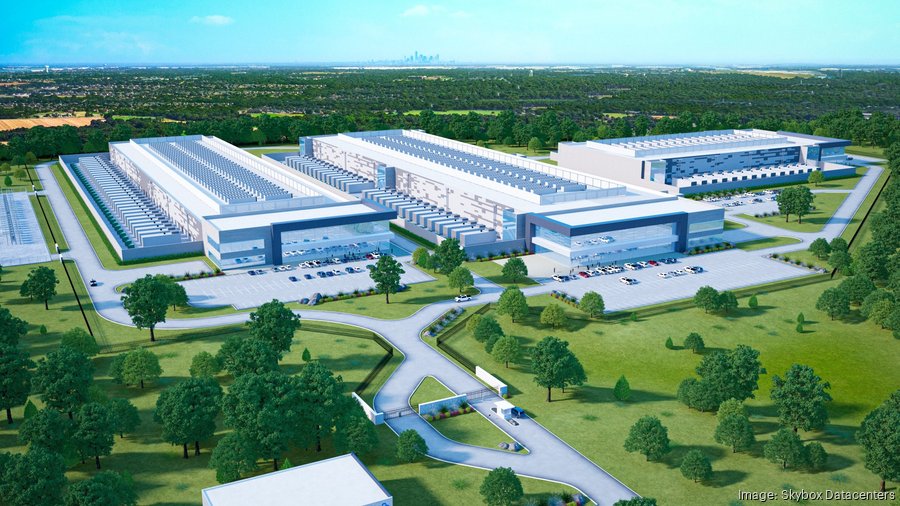
What caught my attention most was the competition itself. HousingWire argued that in Dallas-Fort Worth, Austin, and Houston, data center developers are increasingly bidding for the same kinds of powered, well-located tracts that residential builders would otherwise pursue, pushing land prices higher and making future housing sites harder to secure.
That is a serious Texas signal, and not one we have talked about enough. The state’s next land story may not be just suburb versus city or ranch versus retail. It may be housing versus compute. In a place growing this fast, that kind of competition could shape where homes get built, how far out they go, and what kinds of communities still pencil.
Key Takeaways
★ Data centers are becoming a real competitor for Texas land.
★ Future housing supply may be pushed farther outward.
★ Higher land costs can change what residential projects still work.
★ The next Texas growth battle may start with power access.

Taken together, these stories show a Texas market that is still active, but more exact about what it wants. Houston is rewarding ownership depth in places that already function well. The Hill Country is still getting built in big, whole-environment terms. Denton is adding housing that fills a practical gap. And statewide, the value of land is being tested by a new kind of buyer with a very different return model.
The signal I would watch next is where land starts getting sorted by purpose more aggressively than before. That could be a mixed-use district adding another strategic piece, a master plan trying to become a full town, or a growth corridor where housing developers suddenly have to compete with infrastructure buyers. Texas still has room, but the terms for that room are getting more interesting.
See you out on the property,
 | I’m Hannah Collinsworth, a Texas real estate writer and former Texas Monthly editor who has spent years covering architecture, land, and the people shaping both. Raised in San Antonio and now based in Houston, I write Texas Property Round Up with one belief at the center: the most interesting property stories are never just about the house, but what the house reveals about where Texas is headed. |
How was today's edition?Rate this newsletter. |